Brake Warning Signs Iowa Drivers Should Not Ignore
Brakes almost always warn you before they fail, if you know what to listen and feel for.
October 14, 2026 · 4 min read
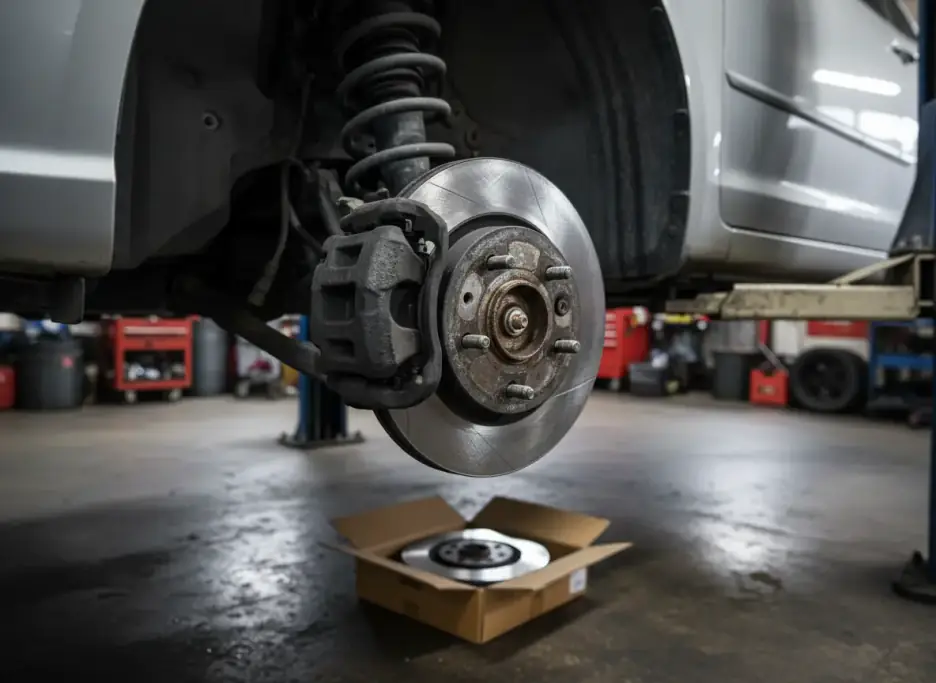
Of everything on your car, brakes are the part you'd least like to be surprised by. The good news is that they rarely fail without a warning. They squeal, grind, shudder, drift or go soft first. The trouble is that these signs come on slowly, and it's easy to get used to a new noise or a slightly longer stopping distance without noticing. If you've been telling yourself it's probably nothing, this list is for you.
A high squeal when you slow down
Most brake pads have a small metal tab built in to warn you. When the friction material wears down to a certain point, that tab touches the rotor and makes a high, thin squeal. It's not a bug, it's a feature, and it's telling you the pads are getting thin. A squeal doesn't always mean an emergency, but it does mean you're on the clock. Some squeals also come from dust, moisture or glazed pads, so a quick inspection will sort out which one you have.
A grinding or growling sound
Grinding is the sign to take most seriously. It usually means the pad material is gone and metal is rubbing on metal. At that point you aren't just wearing out a pad. You're cutting into the rotor, and that makes the repair bigger and the stopping weaker. If you hear grinding every time you brake, have the car looked at right away and avoid long drives until it has.
A pulsing or shaking pedal
If the brake pedal pushes back against your foot in a rhythm, or the steering wheel shakes when you slow from highway speed, the rotors are probably no longer smooth. Heat, wear and uneven pad contact can leave the surface with thin and thick spots, and your foot feels each one as a pulse. Sometimes a rotor can be resurfaced to make it smooth again, and sometimes it's too worn and needs replacing. A technician can measure it and tell you which.
Pulling to one side, or a soft pedal
- If the car drifts left or right when you brake, one side may be gripping harder than the other. A sticking caliper or a collapsed brake hose are common reasons.
- If the pedal feels spongy or sinks closer to the floor than it used to, there may be air in the lines, a fluid leak, or a problem in the master cylinder.
- If you have to pump the pedal to get a firm feel, stop driving the car and call for a tow. That is not a wait-and-see symptom.
- If you notice a burning smell after a stop, a brake may be dragging and overheating.
- If the brake fluid reservoir is low, that fluid went somewhere, and it deserves a look before you drive far.
The ABS or brake warning light
Your dash has more than one brake-related light, and they don't mean the same thing. The red brake light can point to low fluid, a parking brake that's still engaged, or a hydraulic problem. The amber ABS light means the anti-lock system has detected a fault. In many cars the regular brakes still work when the ABS light is on, but the anti-lock function that helps you steer through a hard stop on a slick road may not. Given an Iowa winter, that's a feature you want working. Traction control often relies on the same sensors, so you may see more than one light at once.
Road salt, and what we check
Winter here is hard on brakes for reasons that have nothing to do with how you drive. Road salt and brine get thrown into the wheel wells all season. Salt speeds up rust on rotors, so the surface can pit and wear unevenly. It can also attack calipers, slide pins and brake lines, which is how a caliper ends up sticking or a line ends up leaking. A car that sits for a few days between trips can develop a layer of surface rust on the rotors that squeals or grinds until it scrubs off, and sometimes the corrosion goes deeper than that.
This is why a brake check before and after winter is a good habit. Inspecting the pads, looking at the rotors, checking fluid levels, and making sure the calipers and slides move freely can catch trouble while it's still a small repair.
At Ultimate Automotive Service Center, a brake inspection covers wear on the pads and shoes, the fluid levels, drum or disc systems, and the condition of the rotors, with a road test to confirm what we find. We also work on anti-lock brake systems, traction control and electronic parking brakes, and we'll replace worn components and resurface rotors when that's the right call. We'll show you what we found and explain it in plain terms.
You can find us at 5900 Oakwood Drive in Urbandale, open from 7 AM and until 9 PM on weeknights, so you don't have to take a morning off work to get your brakes checked. Call (515) 270-2096 to set up a time. And if your pedal ever goes soft or sinks to the floor, don't drive it in. Call and we can send a tow.
Ultimate Automotive Service Center, (515) 270-2096
Call (515) 270-2096More articles
Why Tire Tread Matters More in Rain and Snow
The grooves in your tires do real work every time the road gets wet, and they run out sooner than most drivers think.
What Your Check Engine Light Is Trying to Tell You
The light is a message from your car's computer, and reading it correctly starts with whether it's steady or blinking.