When to Call a Tow Instead of Driving It In
Driving a damaged car to the shop can turn a repair into a bigger one, and sometimes into an unsafe trip.
October 14, 2026 · 4 min read
When something goes wrong with your car, the instinct is to limp it to the shop. It feels responsible: you're getting it fixed as fast as you can. But some problems get much worse with every mile, and a few are unsafe to drive on at all. Knowing which is which can save your engine, your transmission and, in some cases, you. Here's how to tell when it's time to stop and make the call.
Signs that mean stop driving now
- The temperature gauge is climbing into the red, or you see steam coming from under the hood. Driving an overheating engine can warp parts and turn a cooling repair into an engine replacement.
- The oil pressure warning light comes on and stays on. Without oil pressure, internal parts can start to damage themselves within minutes.
- The brake pedal goes to the floor, feels very soft, or the car won't slow down properly. Do not drive on failing brakes.
- You hear a loud grinding, banging or clunking noise that wasn't there before, especially if it changes with speed.
- You see smoke, smell burning or smell fuel. Pull over, shut the engine off, and move away from the car if there's any sign of fire or a leak.
- The check engine light is flashing and the car is shaking or has lost power.
- Steering has become stiff, loose or unresponsive, or a wheel looks like it's leaning or wobbling.
- A tire is shredded or flat and you don't have a spare or the tools to change it safely.
If any of those happen, the safest decision is almost always to find a safe spot, get the car stopped and make the call. A tow costs you a phone call and some patience. Continuing to drive can cost you far more than that.
Stay safe while you wait
Get the car as far off the road as you can, turn on the hazard lights, and set the parking brake. If you're on a busy road or highway, think carefully about where you wait. In many situations the safest place is outside the vehicle and well away from traffic, though in bad weather you may want to stay warm in the car with your seat belt on. Use your judgment based on the traffic around you. If anyone is hurt, or you feel you're in danger, call 911 first.
What to tell the tow operator
A tow goes faster and smoother when the person on the phone has good information. Before you call, take a breath and gather these details.
- Exactly where you are: the road, the nearest cross street or mile marker, and which direction you were heading.
- The year, make and model, and whether it's front-wheel, rear-wheel, all-wheel or four-wheel drive.
- What happened, in plain words: overheating, wouldn't start, strange noise, warning light, accident.
- Whether the car can be shifted into neutral and whether the wheels roll freely.
- Whether the car is lowered, has damage, or has anything that would make it hard to hook onto.
- Where you want it taken, and how many people need a ride.
Don't worry if you don't know every answer. Tell the operator what you do know, and mention anything unusual. A good dispatcher would rather hear too much than too little.
Wheel lift or flatbed?
You'll hear these two terms. A wheel lift tow raises one end of the car, usually the drive wheels or the front, and rolls the other two wheels along the road. It works well for many everyday situations and is quick to set up. A flatbed tow carries the whole car on a bed with all four wheels off the ground, and it's the better option for many all-wheel and four-wheel drive vehicles, low or lowered cars, damaged vehicles, and any car that can't roll freely. Your owner's manual may spell out what's recommended for your vehicle, and the operator can help you decide. If you aren't sure, ask for a flatbed.
What we can do when you call
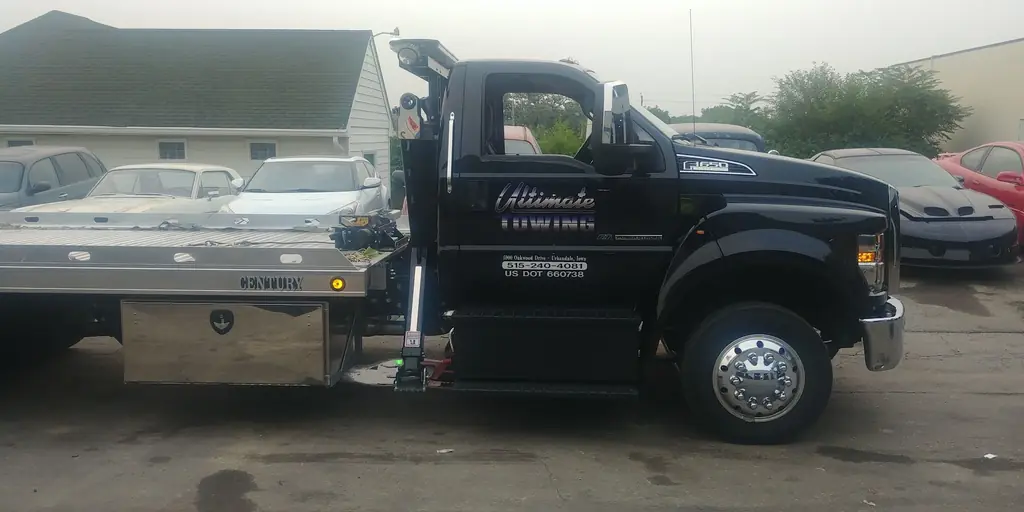
Ultimate Automotive Service Center is a full-service auto repair and towing company, and its trucks run under the Ultimate Towing name. We offer damage-free towing with wheel lifts or flatbeds, for light and medium duty trucks, either local or long distance. We can also help with jump-starts, lockouts, tire changes and winch recovery. One call can get your car moving and onto the right repair path.
Our shop is at 5900 Oakwood Drive in Urbandale, open 7 AM six days a week and until 9 PM on weeknights. Call (515) 270-2096 and tell us what's happening. We'd rather hear from you before the situation gets worse, and it's always better to tow it in than to drive it into a bigger repair.
Ultimate Automotive Service Center, (515) 270-2096
Call (515) 270-2096More articles
Why Tire Tread Matters More in Rain and Snow
The grooves in your tires do real work every time the road gets wet, and they run out sooner than most drivers think.
What Your Check Engine Light Is Trying to Tell You
The light is a message from your car's computer, and reading it correctly starts with whether it's steady or blinking.